Zero liquid discharge that ends in salt you can sell
Almost anyone can evaporate a brine to dryness. Very few can run zero liquid discharge and hand you a single salt clean enough to have a market. That gap is where JINGYU works. It is the difference between a disposal cost and a revenue line.
What is zero liquid discharge?
Zero liquid discharge is a treatment configuration in which no liquid effluent leaves the site. The water is recovered and reused, and every dissolved salt is concentrated, crystallized, and removed as a solid.
The hard part is not reaching dryness. It is what the solid turns out to be. Most ZLD plants produce a mixed waste salt that has to be landfilled as hazardous waste. JINGYU designs the whole train so that the solid comes out as a single, saleable industrial salt.
That distinction sounds like a detail. On the balance sheet it is the whole project. A plant that pays to bury its salt and a plant that sells it are two different businesses running the same evaporator.
How we think about wastewater
At JINGYU we do not treat wastewater as an end-of-pipe obligation. We treat it as an industrial medium that can be cleaned, recovered, and given value back. Our purpose is to connect water treatment to industrial upgrading rather than to sit at the end of the pipe.
Wastewater treatment has to reach past end-of-pipe control, and plan source reduction, process optimization, and resource recovery as one problem.
From source reduction, to zero liquid discharge, to releasing the value locked in the residue.
Five pillars this rests on
Philosophy
Process engineering and chemical engineering fused together, so that resources are genuinely regenerated rather than relocated.
Application
Focused on high-complexity wastewater, the streams other contractors decline to bid.
Process
Full-chain process integration, from the first physical stage to the final crystallizer.
Resource recovery
Recovering and reusing both the water and the by-products, as products with a specification.
Operation
Long-term, safe, stable running. We hold the operating contracts, so the design has to work for twenty years.
Where this sits in the industry
Wastewater treatment is a pyramid. Meeting a discharge permit is the base, and most of the market operates there. Water reuse is the middle. Recovering the dissolved solids as products is the apex. Very few companies have taken that to full commercial scale.
Why most ZLD plants make waste, not product
The failure is not in the crystallizer. It is upstream.
Brine arriving at a crystallizer normally carries two problems. It still contains high-molecular-weight refractory organics, which stain whatever crystallizes. It also contains several anions at once, mainly chloride and sulfate, so the product is a mixture. A mixed, organics-stained salt has no buyer at any price. That is why it goes to hazardous landfill.
Producing a saleable salt therefore requires two things before the thermal step: taking the organics out, and separating the ions. Neither is achieved by building a bigger evaporator. Both are process design problems. The three packages below exist to solve them.
Three packages, one integrated train
These are not products sold separately. They are the three points in a ZLD train where the outcome is decided, and they are engineered together against one specific water.
HiBARS™ — High-Recovery Brine Reuse
Higher water recoveryHiBARS concentrates difficult brines well past conventional membrane limits before any thermal step, recovering more reusable water and cutting the downstream thermal duty in integrated MLD and ZLD trains.
OROX™ — High-Salinity Brine Purification
Cleaner brine for crystallizationOROX separates first and oxidizes second. Our proprietary TSMM™ membrane separation removes the high-molecular-weight refractory organics. Targeted oxidation is then applied only to what remains. The conventional approach oxidizes everything, burning energy on molecules a membrane could have removed for a fraction of the cost.
Separating the ions, not just drying the brine
SERECS™ — Selective Evaporation, Salt Separation & Crystallization
Single-species salt recoverySERECS applies nanofiltration, thermal, or freeze separation according to the actual feed chemistry and the product you need. Sodium chloride, sodium sulfate, and other salts come out separately rather than as a blend. The route is selected per project. There is no single correct answer across every water, which is why we start every job from a process engineer reading your analysis rather than from a standard package.
What comes out, and who buys it
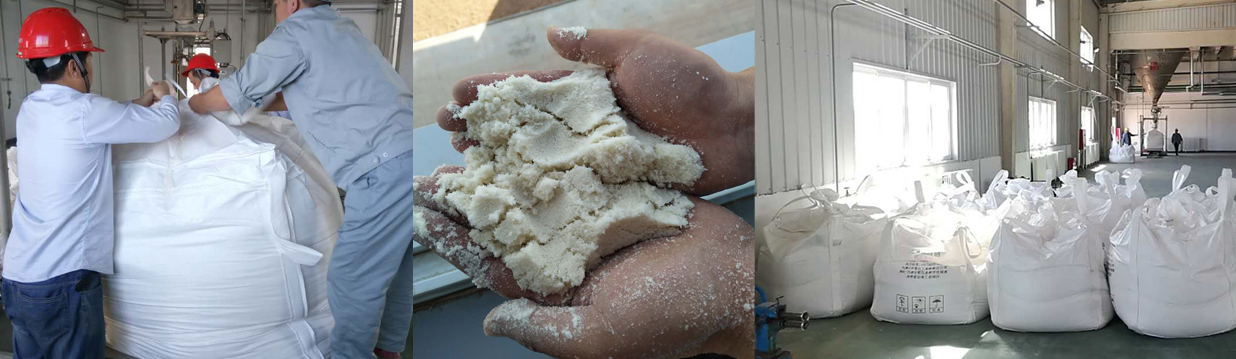
These are the salts our plants produce, the standards they meet, and where they go. Purity is stated against Chinese national standards. The nearest international equivalent is given so you can benchmark against your own market.
| Salt | Purity | Standard | Nearest international analogue | Annual output | Off-take |
|---|---|---|---|---|---|
| Sodium chloride NaCl | ≥ 97.5% | GB/T 5462-2015 Dry salt grade I & II | ≈ EN 973 Type B water-treatment salt | 706,430 t | Chlor-alkali, water softening; long-term contracts |
| Sodium sulfate Na2SO4 | ≥ 99.0% | GB/T 6009-2014 Class II-1 | Aligns with common industrial 99% specs in the EU and US | 687,520 t | Detergent, glass, pulp |
| Potassium chloride KCl | ≥ 93.0% | GB/T 6549-2011 Superior-first grade | MOP 60% K2O (0-0-60) | 4,725 t | Fertilizer, chemicals |
| Potassium sulfate K2SO4 | Water-soluble K2O ≥ 52% | GB/T 20406-2017 Premium grade | SOP 50% K2O (0-0-50) | 9,785 t | Fertilizer, chemicals |
| Ammonium sulfate (NH4)2SO4 | Nitrogen ≥ 20.5% | GB/T 535-2020 Type I | AS 21 (21-0-0 + 24S) | 17,928 t | Fertilizer |
Read the last column again. These are not disposal routes. They are markets, and several of our projects sell into them under long-term off-take agreements. The salt has a price, and that price sits on the plant’s operating economics for its entire life.
The scale is the proof
Pilot data is easy to produce. What is difficult, and what almost nobody else can show, is this much material coming out of operating plants year after year. The figures below are company performance statistics as of early 2026, covering delivered EPC projects and assets currently in operation.
By-product recovery now runs at the scale of a large chemical salt works
Annual by-product capacity across the fleet has reached 1,889,216 tonnes. That is not a by-product line. That is a million-tonne salt plant that happens to be fed by wastewater.
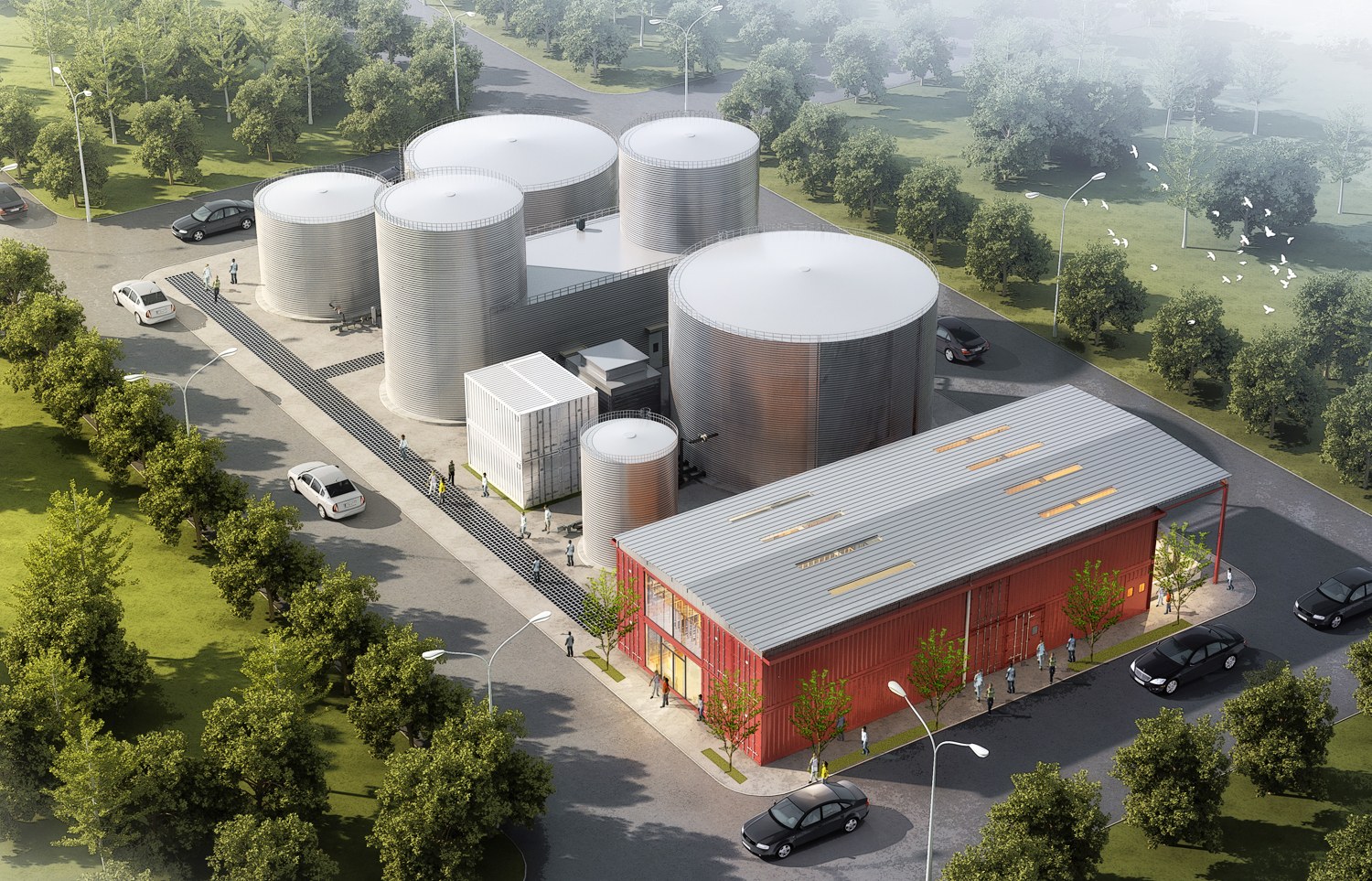
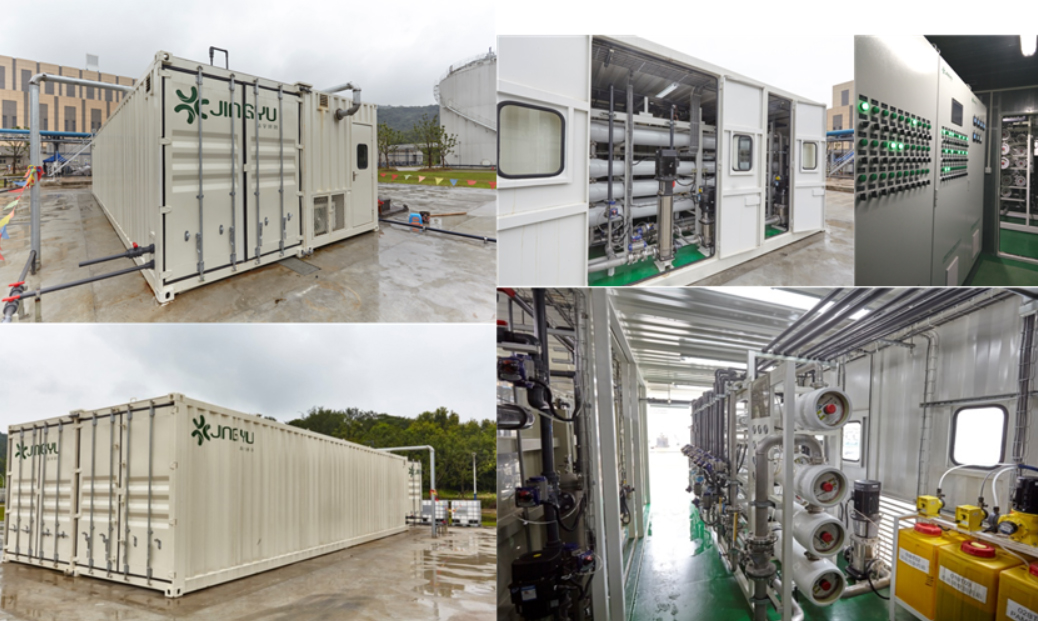
Our ZLD plants produce more industrial salt each year than many countries’ dedicated salt works. That is not a marketing line. It is what happens when resource recovery is designed in from the first process sheet rather than bolted on at the end. You can see the plants behind these numbers on our projects page.
Why end-to-end matters
Every stage in a ZLD train is coupled to the one before it. What the crystallizer can produce is decided by what the membranes did. That in turn was decided by what the biology left behind. A vendor who supplies one stage cannot be held to the outcome of the whole.
This is also why lifecycle cost, not equipment price, is the number worth comparing. A cheaper evaporator fed with dirtier brine costs more over twenty years. It also produces a salt nobody buys.
The same chain, drawn as an engineering flow sheet
The diagram above is the idea. Below is how it is actually specified, unit by unit, on a delivered project.
Frequently asked questions
What is zero liquid discharge?
Zero liquid discharge, or ZLD, is a treatment configuration in which no liquid effluent leaves the site. Water is recovered and reused, and the dissolved salts are concentrated, crystallized, and taken off as solids. A ZLD plant is judged on two things: how much water it returns, and what condition the solids come out in.
What is the difference between ZLD and MLD?
Minimal liquid discharge stops at a small residual brine stream, usually sent to an evaporation pond or a disposal contractor. ZLD closes the loop entirely. MLD costs less to build, so the right choice depends on local disposal cost, land availability, and how tight the discharge permit is.
Why do most ZLD plants produce mixed waste salt?
Because the brine reaching the crystallizer still contains organics and a mix of anions. Whatever crystallizes out is a blend, and a blend has no market. Producing a saleable single salt requires removing the organics first and then separating the ions before crystallization, which is a different process design, not a bigger evaporator.
What purity does JINGYU's recovered salt reach?
Sodium chloride at 97.5% or better, meeting GB/T 5462-2015, which is close to EN 973 Type B water-treatment salt. Sodium sulfate reaches 99.0% or better under GB/T 6009-2014 Class II-1. Potassium chloride, potassium sulfate, and ammonium sulfate are all produced to their respective Chinese national standards.
Can the recovered salt actually be sold?
Yes. JINGYU salt goes into chlor-alkali plants, water softening, detergent, glass, pulp, and fertilizer, and several projects run long-term off-take contracts. Recovered salt turns a disposal cost line into a revenue line, which is the single largest change ZLD with salt separation makes to plant economics.
How much brine reduction can be achieved before evaporation?
HiBARS concentrates difficult brines well beyond conventional reverse osmosis limits before any thermal step. Every cubic meter recovered at that stage is a cubic meter that never has to be evaporated, and evaporation is the largest energy cost in a ZLD plant.
Is this proven at full scale, or only in pilots?
JINGYU has delivered 45 integrated ZLD systems and operates 18 of them under long-term contracts. Across those plants, treatment reaches 200.8 million m³ a year and by-product capacity reaches 1.89 million tonnes a year. The technologies described here run in commercial plants, some for eight years without failure.
Send us the brine, and we will tell you what it can become
Give us an ion balance and a COD figure. We come back with the separation route that fits and the salt grades it can reach. We will also price the recovered product against what disposal costs you today.
Request a ZLD assessment
A partial analysis is enough to start. Everything you send is treated as confidential.
What lets us answer properly
- Flow rate and TDS
- Ion balance, especially chloride and sulfate
- COD, and whether the organics are refractory
- Your current brine disposal route and its cost
- Whether you have an off-take market for salt nearby
Contact us directly
- info@jing-yu.com
- Phone
- +86 21 6593 0816
- Office hours
- Monday to Friday, 9:00 to 18:00 Shanghai time (GMT+8)