
Three institutes, one job: make it work on the real water
JINGYU wastewater research and development is not a department that publishes. It tells the engineering team whether a process route will hold on your actual feed, and proves it before anyone commits to a full-scale design.
Why wastewater research and development belongs in-house
Complex industrial wastewater has no standard recipe. Two coal chemical plants a hundred kilometers apart can need different process routes. The difference only shows up when someone tests the actual water.
That is why JINGYU wastewater research and development sits inside the company rather than being bought in. The people who validate a process are the ones who then build it and operate it for twenty years.
The three institutes divide the work by time horizon and by geography. One solves today’s project problems. One develops what we will need in five years. One serves the west, where much of China’s coal chemical and mining industry sits.
The three institutes
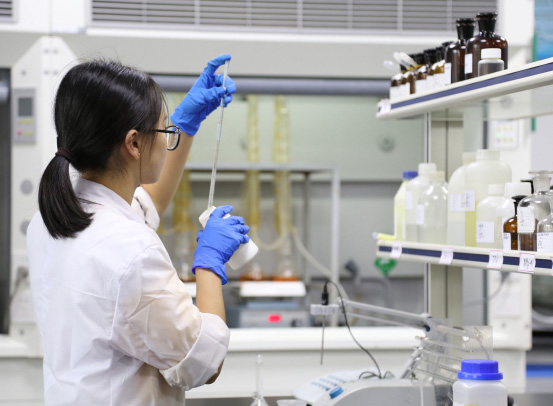
Shanghai JINGYU Environmental Laboratory
Shanghai · Applied technology R&D headquartersThe laboratory that works on live projects. It resolves the difficult problems that come out of engineering, proves whether a route is feasible, and costs it before it is offered. When a project team hits something the standard packages do not cover, it goes here.
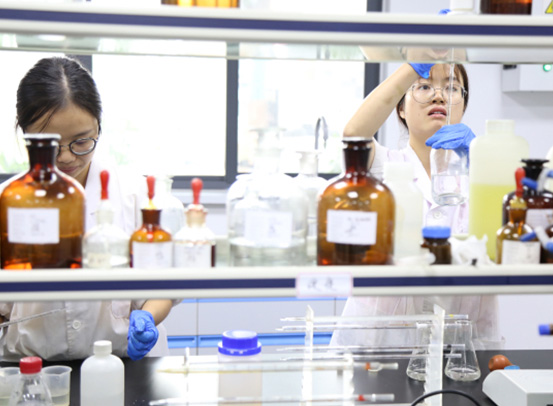
Shanghai University–JINGYU Environmental Research Institute
Shanghai · Joint institute with Shanghai UniversityThe forward-looking arm. It develops technology at the front edge of the field, using university and government platforms to bring outside research capability into JINGYU. It was established by our chief scientist, Professor Minghong Wu. Its work on new materials has already reached our projects.
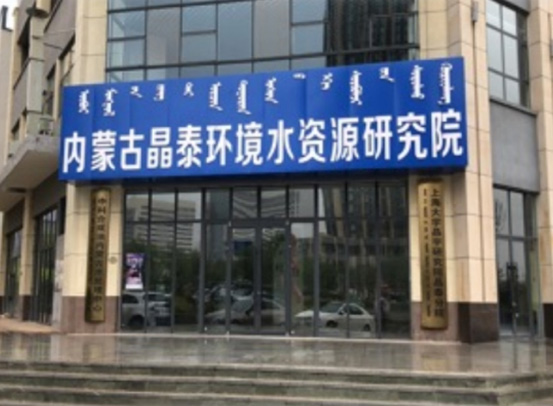
Inner Mongolia Jingtai Environmental Technology Research Institute
Inner Mongolia · Serving western ChinaThe western base. It carries the technology platform and operating experience of the Shanghai laboratory, and draws on the university institute’s resources. It serves the coal chemical and mining industries concentrated across northwest China. Research close to the plants shortens the loop between a problem and an answer.
How the three fit together
They are not three versions of the same laboratory. Each has a different job, and the output of one feeds the next.
The loop closes at the plant. We operate 18 zero liquid discharge plants ourselves, so operating data returns to the laboratories and into the next design. A pure contractor has no such feedback path. It is also why our end-to-end model and our R&D system are the same argument.
From bench to plant
The sequence rarely changes, and skipping a step on difficult water is how projects fail.
Water analysis
Full characterization of the feed, including the ions and organics that decide everything downstream.
Bench and pilot trials
Testing on the real water, not a synthetic substitute, until the numbers are reliable.
Process package and design
The validated route becomes a productized package, engineered into the plant and priced with confidence.
Our people include one academician, three PhDs, and more than 50 holders of master’s degrees and senior engineer titles. See who leads this work on our team page.
Frequently asked questions
How many research institutes does JINGYU operate?
Three. The Shanghai JINGYU Environmental Laboratory handles applied engineering research. The Shanghai University–JINGYU Environmental Research Institute handles frontier technology. The Inner Mongolia Jingtai Environmental Technology Research Institute serves western China. Together they run more than 1,500 m² of pilot and analytical facilities.
What does the R&D team actually do on a project?
It analyzes your water, runs bench and pilot trials on the real feed, and costs the route that works. Nothing goes into a full-scale design on difficult water until it has been demonstrated on that water.
Is the university partnership real or nominal?
It is a joint institute established with Shanghai University, led by our chief scientist, Professor Minghong Wu. Work from it, including graphene-based materials, has been applied in JINGYU projects rather than staying in journals.
How much of this is patented?
More than 160 patents and proprietary technologies, including over 30 invention patents. Our nine core process packages are all productized, patented, and running in commercial plants.
Who staffs the institutes?
More than 200 technical professionals across the company, including one academician, three PhDs, and over 50 holders of master's degrees and senior engineer titles.
Can you run a pilot on our site?
Yes. For complex streams we prefer it. A containerized pilot on your feed, under your operating conditions, removes most of the risk from a full-scale design.
Bring us a water nobody else wants to touch
Send an analysis and tell us what has already been tried. If the answer needs a pilot, we will say so, and tell you what it would take.
Useful to include
- Flow rate, TDS and ion balance
- COD, ammonia, and whether the organics are refractory
- What has been tried and where it failed
- Your discharge limit or reuse target
Contact us directly
- info@jing-yu.com
- Phone
- +86 21 6593 0816
- Office hours
- Monday to Friday, 9:00 to 18:00 Shanghai time (GMT+8)