Turning complex industrial wastewater into reusable water and recoverable resources
JINGYU builds end-to-end wastewater solutions for complex industrial water and zero liquid discharge. One team covers process, engineering, equipment, construction, and twenty years of operation. One team is answerable for the result.
What end-to-end wastewater solutions actually means
End-to-end wastewater solutions means one partner is accountable from the first water analysis to the plant running twenty years later. That covers process development, engineering design, core equipment, construction, commissioning, and long-term operation.
The alternative is what most owners live with. A process licensor here, an equipment vendor there, an EPC contractor to assemble it, an operator inheriting whatever arrives. Everyone meets their own guarantee. Nobody is accountable for the plant.
Why buying stages separately goes wrong
This is not a commercial argument. It is a process one.
In a complex wastewater train, every stage is coupled to the one before it. What the crystallizer produces is decided by the brine the membranes hand it. What the membranes achieve is decided by the organics the biological stage left behind. Change one upstream unit and everything downstream moves with it.
Three suppliers, three inlet assumptions
Split that train across three suppliers and each designs to its own inlet assumption. On difficult water those assumptions rarely hold. Every party then proves it met its contract while the plant misses its target, and the owner absorbs the gap in capital, operating cost, and permit risk.
Our domestic projects are full plant water system management, not single process islands. That is the only way lifecycle cost falls rather than moving from one line item to another.
The full chain we design across
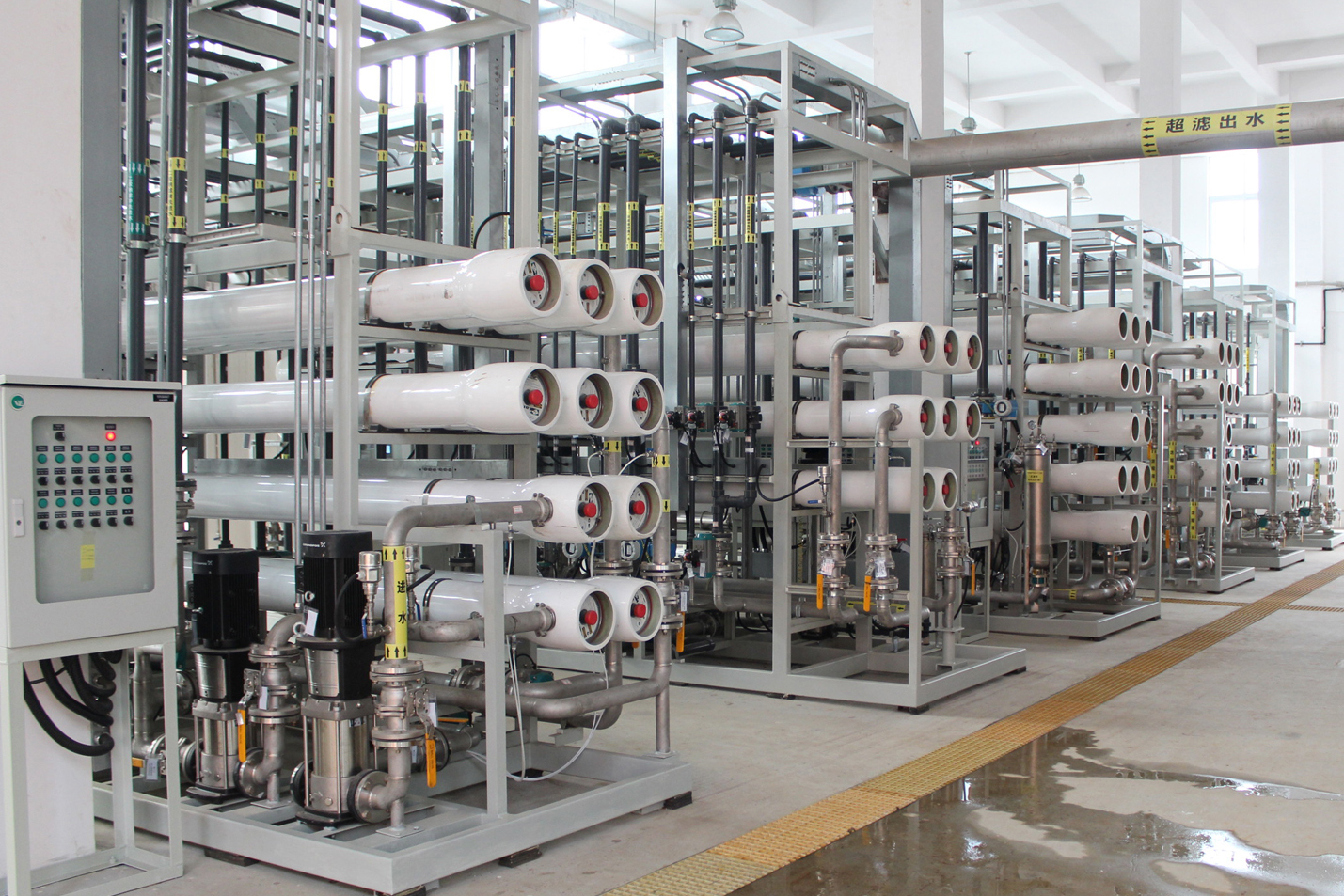
Modular, productized process packages let us cover design, construction, and operation as one system. The result is a ZLD project that is stable, financeable, and operable for the long term.
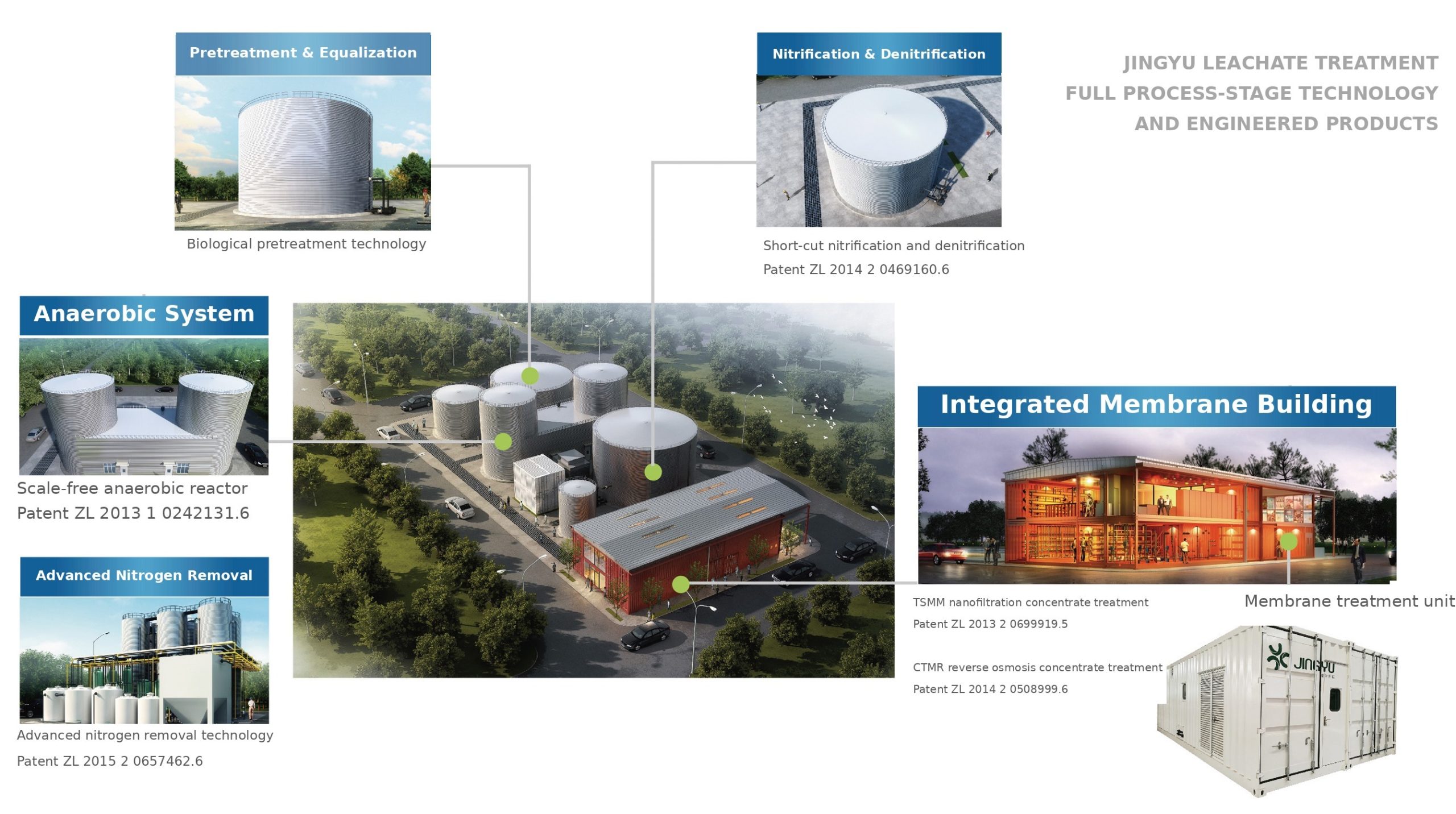
Nine core process packages
Productized means a package has been engineered, patented, built, and run often enough that we know its behavior before your project starts. The four highlighted below decide whether a plant reaches zero liquid discharge with saleable salt.
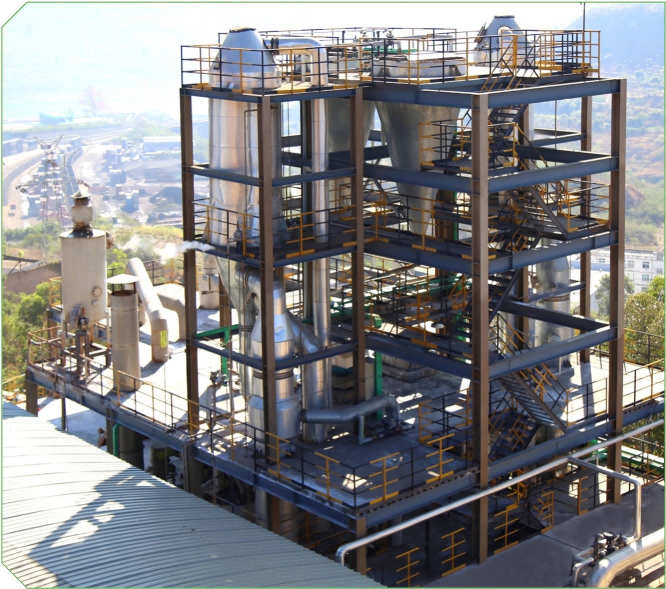
These are combined, not sold off a shelf. Which packages appear in your train, and in what order, comes out of your water analysis. Our zero liquid discharge page explains how the last four work together.
Where we work
Two business lines, both built on the same chain.
Municipal wastewater and resource recovery
- Waste-to-energy plants
- Landfill sites
- Hazardous waste treatment centers
- Incineration fly ash treatment units
Industrial wastewater and resource recovery
- Fine and coal chemicals, including coal-to-gas, coal-to-liquids and coal-to-olefins
- Mining, ore processing and smelting
- Steel and non-ferrous metallurgy
- Refining and petrochemicals
- Photovoltaics and new energy
- Integrated industrial parks, under full plant water system management
- Desalination brine valorization
Why owners choose JINGYU
The competitive core is a salt-separation and crystallization platform for wastewater ZLD and resource recovery, and the organization built around it.
End-to-end delivery and execution
One integrated capability across the whole process chain, from design through construction to handover, with one party answerable for performance.
A verified delivery record
140+ projects delivered and 18 plants in long-term operation. Every claim on this site is traceable to a plant that is running.
ZLD experience across industries
Coal chemical, mining, metallurgy, refining, photovoltaics and municipal waste. The same platform, proven on very different chemistries.
Efficient, low-cost organics separation
Removing refractory organics by membrane before oxidation is the largest cost lever in high-salinity treatment. It is where our technology is strongest.
In-house R&D under an IPD system
Three research institutes and a company-wide integrated product development process, so improvements reach projects rather than staying in papers.
Operation as a feedback loop
We run plants and feed what we learn back into design. Continuous optimization comes from operating data, not from assumptions.
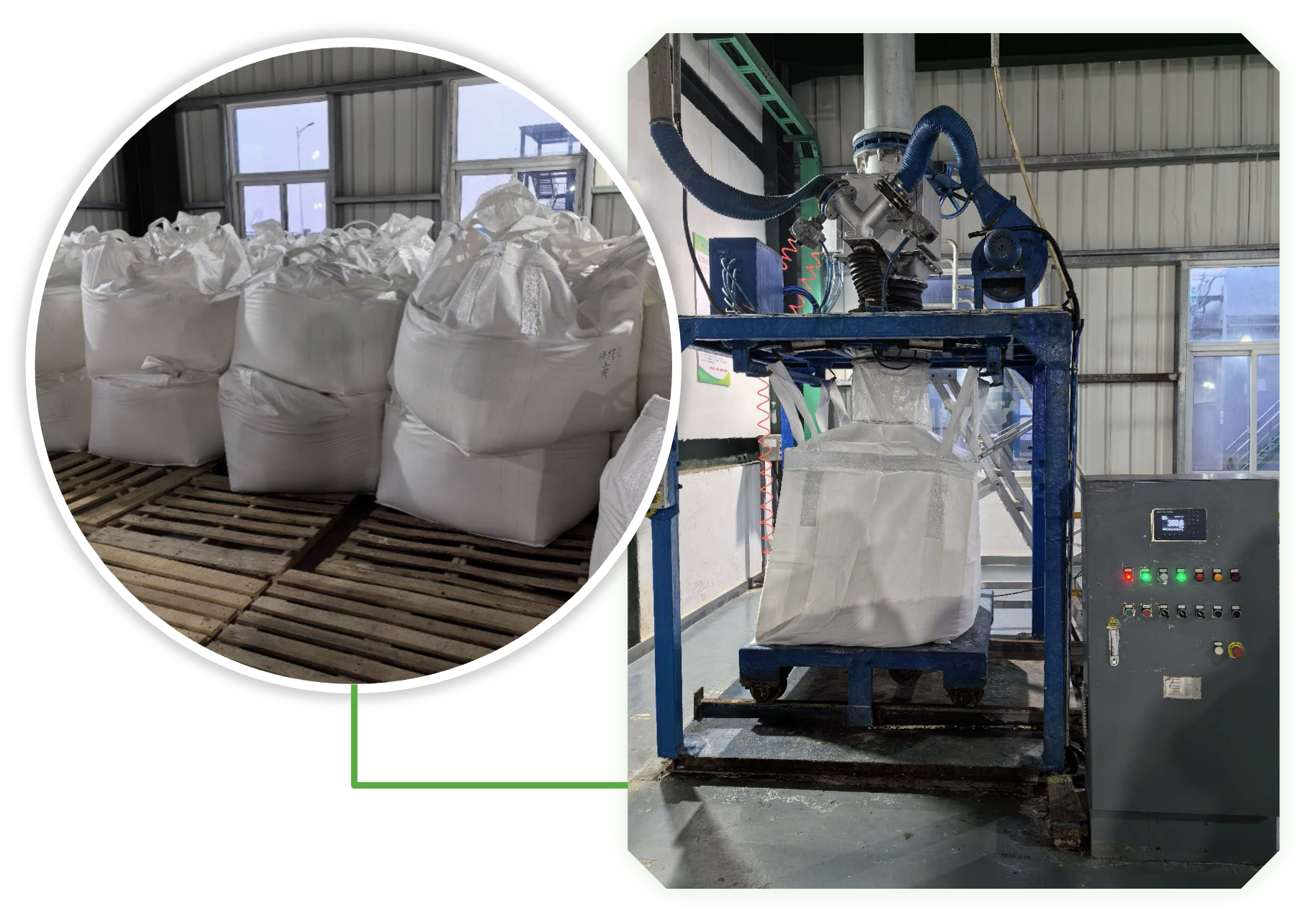
What it adds up to
Company performance statistics as of early 2026, covering delivered EPC projects and assets currently in operation.
Frequently asked questions
What does end-to-end actually mean here?
It means one contract covers process development, engineering design, core equipment, construction, commissioning, and long-term operation. JINGYU is accountable for the water quality and the recovered product at the end of the train, not for the performance of one unit in the middle of it.
Why does buying stages separately go wrong?
Because every stage is coupled to the one before it. What the crystallizer can produce depends on what the membranes delivered, which depends on what the biology left behind. When three vendors supply three stages, each meets its own guarantee and nobody is responsible for the outcome, so the owner absorbs the risk.
Can JINGYU take on only part of the scope?
Yes. Engagements run from a process package or core equipment supply through EP, EPC, EPC+O, and investment models such as BOO, BOT, TOT and ROT. We prefer full scope because that is where our value is, but partial scope is normal work.
How many projects stand behind this?
More than 140 delivered water treatment projects. That includes over 100 municipal projects, more than 50 of which run the full chain from biological treatment through anaerobic and aerobic stages, MBR, nanofiltration and advanced polishing. It also includes more than 60 industrial wastewater solutions, over 40 of them full zero liquid discharge systems with evaporation, crystallization and by-product recovery integrated.
Which industries has this been proven in?
Waste-to-energy plants, landfills, hazardous waste centers and incineration fly ash on the municipal side. Coal chemical, mining and metallurgy, steel and non-ferrous metals, refining and petrochemicals, photovoltaics and new energy, industrial parks under full plant water system management, and desalination brine on the industrial side.
Do you operate the plants you build?
We operate 18 of them under long-term contracts, with an in-house team of more than 650 operators. Holding the operating risk changes how a plant gets designed, because a design decision that saves capital but costs us twenty years of operating expense is a decision we have to live with.
Start with the water, not the equipment list
Send an analysis and tell us what the plant has to achieve. We come back with the chain that gets you there, the packages in it, and what it costs to run.
Discuss your project
A partial analysis is enough to start. Everything you send is treated as confidential.
Useful to include
- Flow rate and TDS
- Ion balance, COD and ammonia
- Discharge limit or reuse target
- New plant, retrofit, or an existing plant that underperforms
- Which parts of the scope you want us to carry
Contact us directly
- info@jing-yu.com
- Phone
- +86 21 6593 0816
- Office hours
- Monday to Friday, 9:00 to 18:00 Shanghai time (GMT+8)